

Netgen/NGSolve#
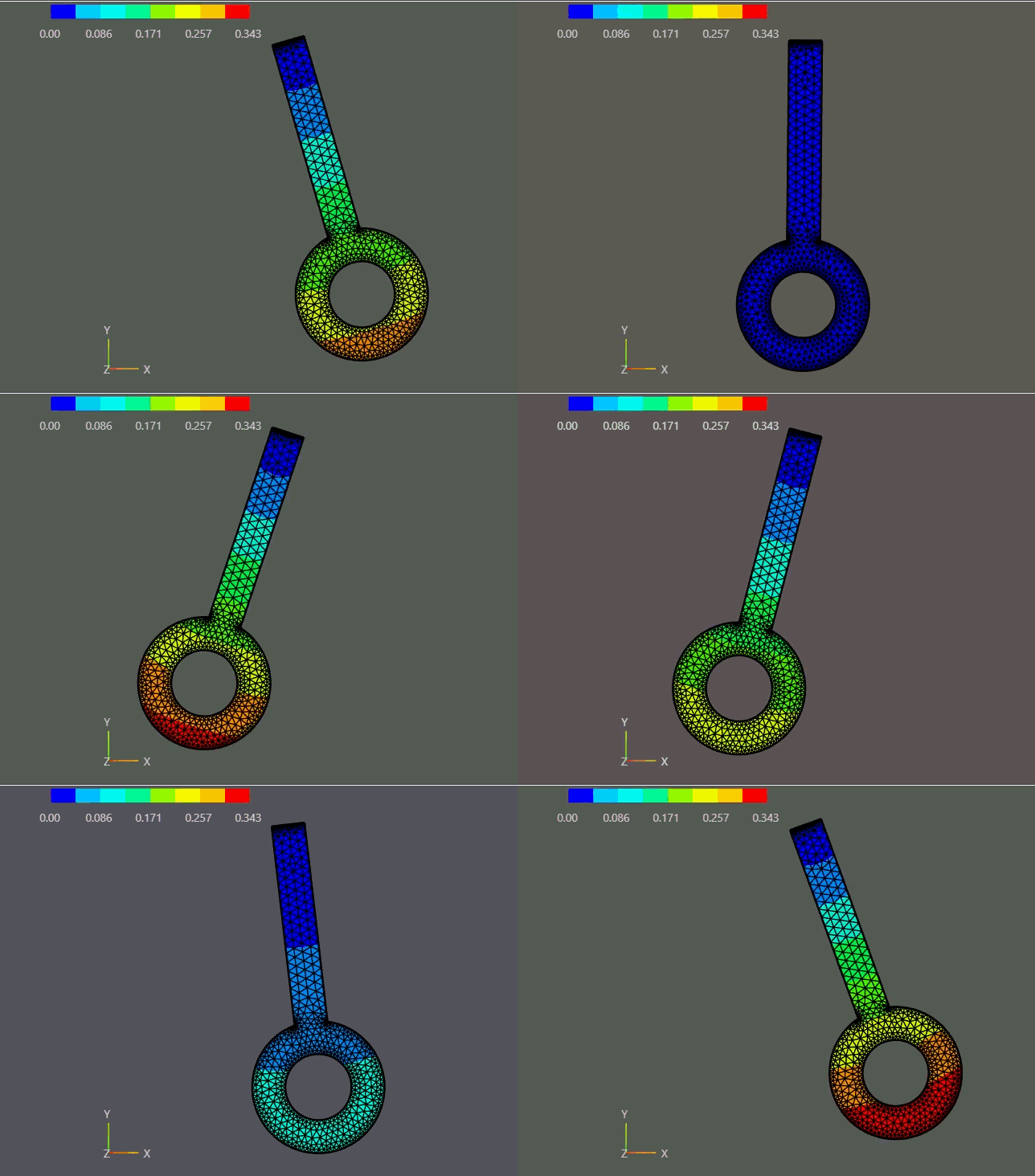
Animation of the FEM pendulum swing.#
This sequence builds a nonlinear, deformable pendulum model step by step using Netgen/NGSolve, starting from core dynamics and extending to actuation and contact.
Main takeaways across the three notebooks:
The pendulum is modeled as a thin 2D hyperelastic body (Neo-Hookean, plane stress) with nonlinear elastodynamics. The 2D reduction is used for reduced computational cost.
A hinge-like pivot is enforced with a mixed FE formulation (VectorH1 + NumberSpace) using mean-zero displacement constraints on the rotation edge.
Time integration is performed with Newmark-style updates and nonlinear solves (Variation(…) + Newton minimization).
A rigid-body proxy angle is extracted from the deformable solution for interpretation and verification.
What each tutorial does:
01_fem_pendulum_basicsBuilds geometry/mesh, material law, FE spaces, and the full weak form (internal energy, inertia, gravity, hinge constraint).
Runs transient simulation and visualizes displacement and stress evolution.
Establishes the baseline model (no external torque, no contact).
02_fem_pendulum_torqueAdds pivot actuation by converting a desired torque into a zero-resultant traction distribution on the hinge boundary.
Implements this as a follower load so the traction remains normal to the deformed boundary during large rotations.
Verifies behavior with/without follower load and compares FEM response to a rigid-body reference (gravity off/on).
03_fem_pendulum_contactExtends the actuated pendulum with wall contact by adding a second body and a contact boundary pair.
Uses an incremental normal-gap penalty energy to resist penetration and tracks minimum contact gap for diagnostics.
Compares non-adaptive vs adaptive time stepping for energy behavior and studies stiff vs compliant pendulum responses during impact.